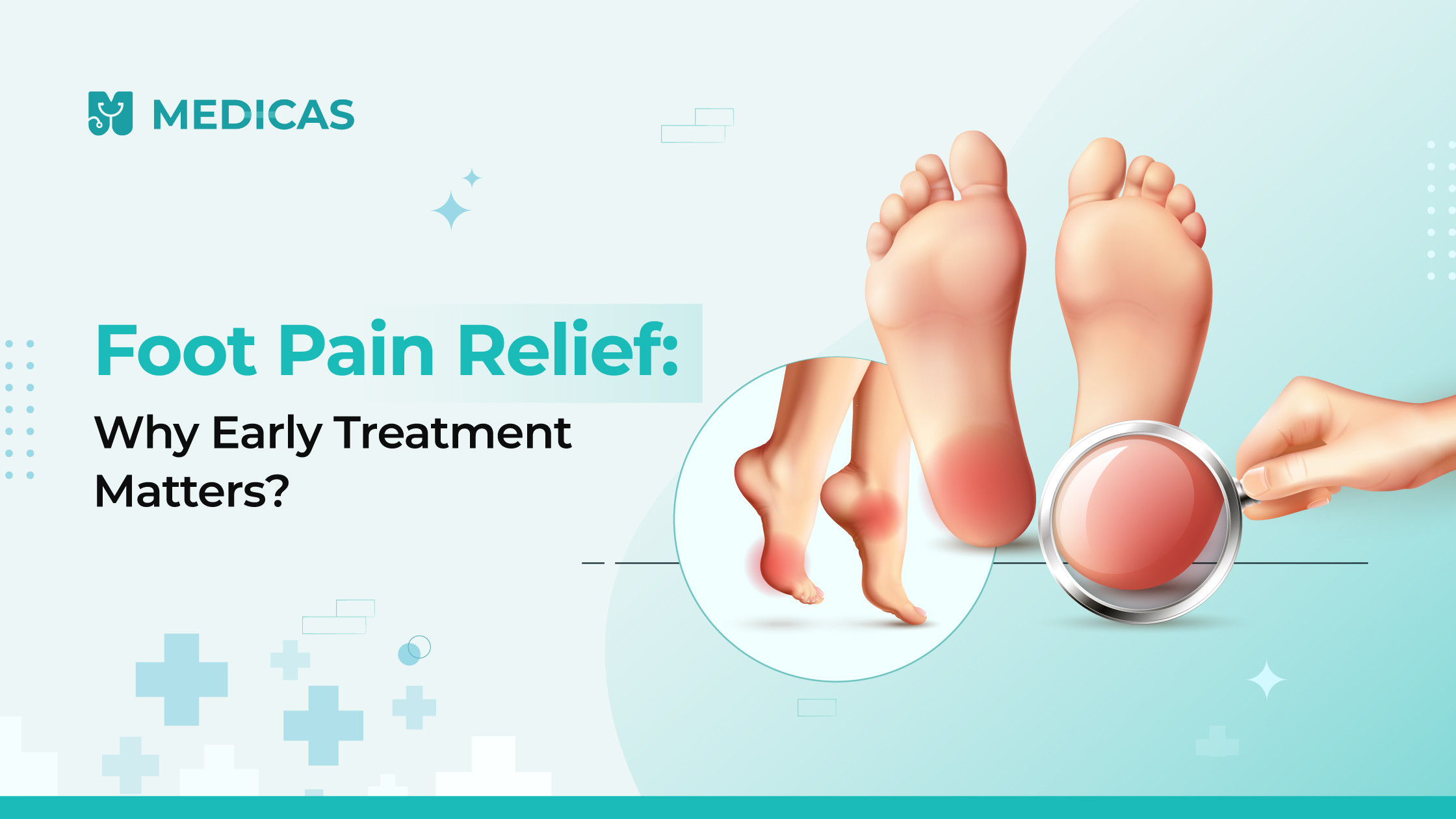
If you’ve ever winced with that first step out of bed or felt a burning ache after standing for too long, you’re not alone. Foot pain is incredibly common and yet too often brushed off—until it starts interfering with daily life. The reality is that every step you take involves a complex structure of bones, ligaments, and tendons working in harmony. When that system is even slightly off, pain can set in fast. Whether it’s a nagging arch discomfort or a stabbing pain in your heel, finding effective foot pain relief early on can make a world of difference. Left untreated, minor foot issues can snowball into chronic conditions that affect your knees, hips, and posture. At Medicas, our online doctor consultation platform makes it easy to speak with a qualified specialist without delay. From foot pain diagnosis to customised care plans, you can book an appointment anytime. This guide will walk you through the most common causes of foot pain, how to relieve it, and why early action matters.
What Causes Foot Pain?
Foot pain can come from many sources—injury, overuse, poor footwear, or medical conditions. Identifying the cause is essential for targeted relief.
Common Causes: Plantar Fasciitis, Flat Feet, Heel Spurs
- Plantar Fasciitis: One of the most frequent causes of heel pain. It happens when the band of tissue running across your foot’s bottom becomes inflamed. The pain is typically sharpest when you first get up in the morning or after sitting for long periods.
- Flat Feet: When your arches collapse, it can put strain on ligaments and muscles throughout the foot. Without proper foot support for pain relief, this can become a chronic issue.
- Heel Spurs: These bony outgrowths at the bottom of your heel are often linked with plantar fasciitis. They can be painless, but in some people, especially those on their feet a lot, they cause persistent discomfort.
Other culprits include arthritis, bunions, stress fractures, and nerve conditions like Morton’s neuroma. If you’re unsure, speak to an orthopaedic doctor at Medicas for an accurate diagnosis.
Acute vs Chronic Foot Pain
- Acute pain usually appears suddenly after an injury—like a sprain, twist, or fall.
- Chronic pain develops over time. It might be the result of long-standing issues like arthritis, overuse, or improper footwear.
Both conditions require different treatment approaches, so early consultation is essential. If you need a quick assessment of your foot pain, you can consult with me directly through Medicas.
Risk Factors: Age, Weight, Footwear, and Activity Level
Several factors make you more prone to foot pain:
- Age: With age, the fat pads on the bottom of your feet thin out.
- Weight: The more you weigh, the more pressure your feet absorb.
- Poor Footwear: High heels, flat flip-flops, or old shoes with no support can cause alignment issues.
- Activity Level: Standing for long hours or running without proper recovery increases strain.
If you fall in one of these categories, using proper foot support for pain relief—like orthotic insoles—can make a major difference. Learn more in our blog on Tips for Maintaining Optimal Orthopedic Health.
Why Early Foot Pain Treatment Is So Important
Pain is your body’s way of saying something’s wrong. Ignoring early foot pain may lead to lasting complications.
Preventing Long-Term Damage and Mobility Loss
Chronic inflammation or repetitive stress can cause permanent changes—like tendon degeneration or bone spurs. Addressing foot pain early helps prevent long-term issues and keeps you mobile.
Avoiding Postural Imbalances and Knee/Back Pain
Your feet are your foundation. When they hurt, your walking pattern changes. That change travels upward, affecting knees, hips, and even your lower back. For many patients, foot problems are the hidden cause of chronic back or knee pain.
Early Diagnosis Leads to Faster Relief
Timely intervention shortens recovery time and avoids complications. With lab tests and imaging services from Medicas, conditions like stress fractures or tendonitis can be caught early and treated before they worsen. Foot Pain Relief Options You Should Know There’s no one-size-fits-all when it comes to managing foot pain. Your treatment should depend on the cause, severity, and your lifestyle.
At-Home Remedies: Ice, Elevation, Stretching
- Ice: Helps reduce inflammation. Wrap an ice pack in a towel and apply for 15-20 minutes.
- Elevation: Rest your feet above heart level to ease swelling.
- Stretching: Gently stretch the plantar fascia and Achilles tendon. Rolling your foot on a frozen bottle is a great dual-purpose technique.
Over-the-Counter Pain Medications and Creams
NSAIDs like ibuprofen can reduce inflammation. Topical analgesics with menthol or capsaicin may offer temporary foot heel pain relief. Use them as a short-term solution unless advised otherwise by a doctor. You can connect with a Medicas doctor online for safe usage guidelines and prescription advice.
When to Use Foot Support or Orthotic Insoles
If your pain is linked to flat feet, high arches, or poor posture, orthotics can help. These insoles distribute pressure evenly and support alignment. They are an excellent tool for both immediate and long-term foot support for pain relief. Custom orthotics prescribed by a podiatrist are ideal, but there are quality off-the-shelf options available for mild cases. Need help figuring out what’s best for you? Book a consultation with me on Medicas. Targeted Solutions for Heel Pain Heel pain deserves special mention because it can be particularly stubborn if ignored.
Causes of Heel Pain: Plantar Fasciitis and Achilles Tendonitis
- Plantar Fasciitis: Already discussed above, it’s the most common source of foot heel pain relief queries.
- Achilles Tendonitis: Caused by overuse or improper stretching, it presents as pain at the back of the heel and can worsen with physical activity.
If you’re experiencing heel discomfort alongside joint stiffness or inflammation, you may want to check out our related blog on Viral Arthritis.
Heel Pads, Support Shoes, and Night Splints
- Heel Pads: Offer cushion and shock absorption during walking.
- Support Shoes: Look for firm soles and arch support.
- Night Splints: These hold your foot in a stretched position while you sleep, reducing morning pain.
These tools are especially useful if your pain is worst after rest or prolonged inactivity.
When to See a Specialist for Heel Pain
If your pain persists beyond 10–14 days of home treatment, it’s time to see a doctor. Swelling, redness, or difficulty bearing weight are red flags. Book a Medicas orthopaedic consult for timely guidance.
Exercises and Stretches for Foot Pain Relief
Movement can be medicine—when done right. Here are a few exercises that can make a big difference.
Calf Stretch, Toe Extensions, and Rolling Techniques
- Calf Stretch: Lean into a wall, one leg forward and one back. Keep your heel grounded.
- Toe Extensions: Use a towel to stretch your toes toward you while sitting.
- Rolling: Use a frozen bottle or tennis ball under the arch for a deep fascia release.
Strengthening Muscles for Long-Term Relief
Strengthening small foot muscles helps support the arch and improve overall balance. Exercises like towel scrunches, marble pickups, and balance drills are great starting points.
How Often to Perform These Exercises
- Stretching: 2–3 times daily.
- Strengthening: 3–4 times a week.
- Rolling techniques: As needed for relief.
Stick to a routine for a few weeks before expecting noticeable changes. For guided rehab plans, you can speak to a physiotherapist through Medicas.
When to See a Podiatrist or Physiotherapist
Warning Signs of a More Serious Condition
Seek professional help if you notice:
- Persistent swelling
- Numbness or tingling
- Visible deformities
- Pain that lasts more than 2 weeks
Conditions like neuropathy, fractures, or systemic arthritis may be at play.
Diagnostic Tests and Imaging
A foot specialist may recommend X-rays, ultrasound, or MRI to confirm the cause. Schedule tests through Medicas for easy access to imaging and blood work.
Customised Treatment Plans Based on Foot Anatomy
Your foot shape, arch height, and gait pattern all influence your pain. A podiatrist can design a treatment plan—often combining physical therapy, custom insoles, and lifestyle advice—to fit your unique needs.
Final Thoughts
Foot pain might seem like a small inconvenience, but left unchecked, it can affect your entire musculoskeletal system. Early treatment, combined with simple tools like orthotics, targeted exercises, and proper footwear, goes a long way in ensuring effective foot pain relief. At Medicas, we’re here to help you take those first pain-free steps. Book an online consultation today.
Frequently Asked Questions (FAQs)
What is the best relief for foot pain?
Ice, stretching, orthotics, and anti-inflammatory medications are effective for most cases. For persistent pain, consult a specialist for customised care. Book online here.
What is the cause of pain under the feet?
It’s often plantar fasciitis, flat feet, or heel spurs. However, stress fractures or nerve conditions may also be to blame.
Are orthotics good for long-term foot support?
Yes, especially for conditions like flat feet, plantar fasciitis, or overpronation. Custom orthotics provide long-term relief and postural correction.
When should I see a doctor for foot pain?
If your pain lasts more than 2 weeks, limits activity, or gets worse over time, consult a doctor. Delaying care may lead to complications.
Disclaimer
Medical Advice: The information provided in this blog post is for educational purposes only and should not be considered as a substitute for professional medical advice, diagnosis, or treatment. Always consult with a qualified healthcare professional for personalized guidance regarding your specific medical condition.
Accuracy of Information: While we strive to provide accurate and up-to-date information, the field of medicine and viral fevers is constantly evolving. The content in this blog post may not reflect the most current research or medical guidelines. Therefore, it is advisable to cross-check any information provided with reliable sources or consult a healthcare professional.
Individual Variations: The symptoms, causes, treatment options, and preventive measures discussed in this blog post are general in nature and may not apply to everyone. It is important to remember that each individual’s situation is unique, and personalized medical advice should be sought when making healthcare decisions.
External Links: This blog post may contain links to external websites or resources for additional information. However, we do not endorse or have control over the content of these third-party websites. Accessing these links is done at your own risk, and we are not responsible for any consequences or damages that may arise from visiting these external sources.
Results May Vary: The effectiveness of treatment options or preventive measures mentioned in this blog post may vary from person to person. What works for one individual may not work the same way for another. It is essential to consult with a healthcare professional for personalised advice tailored to your specific needs