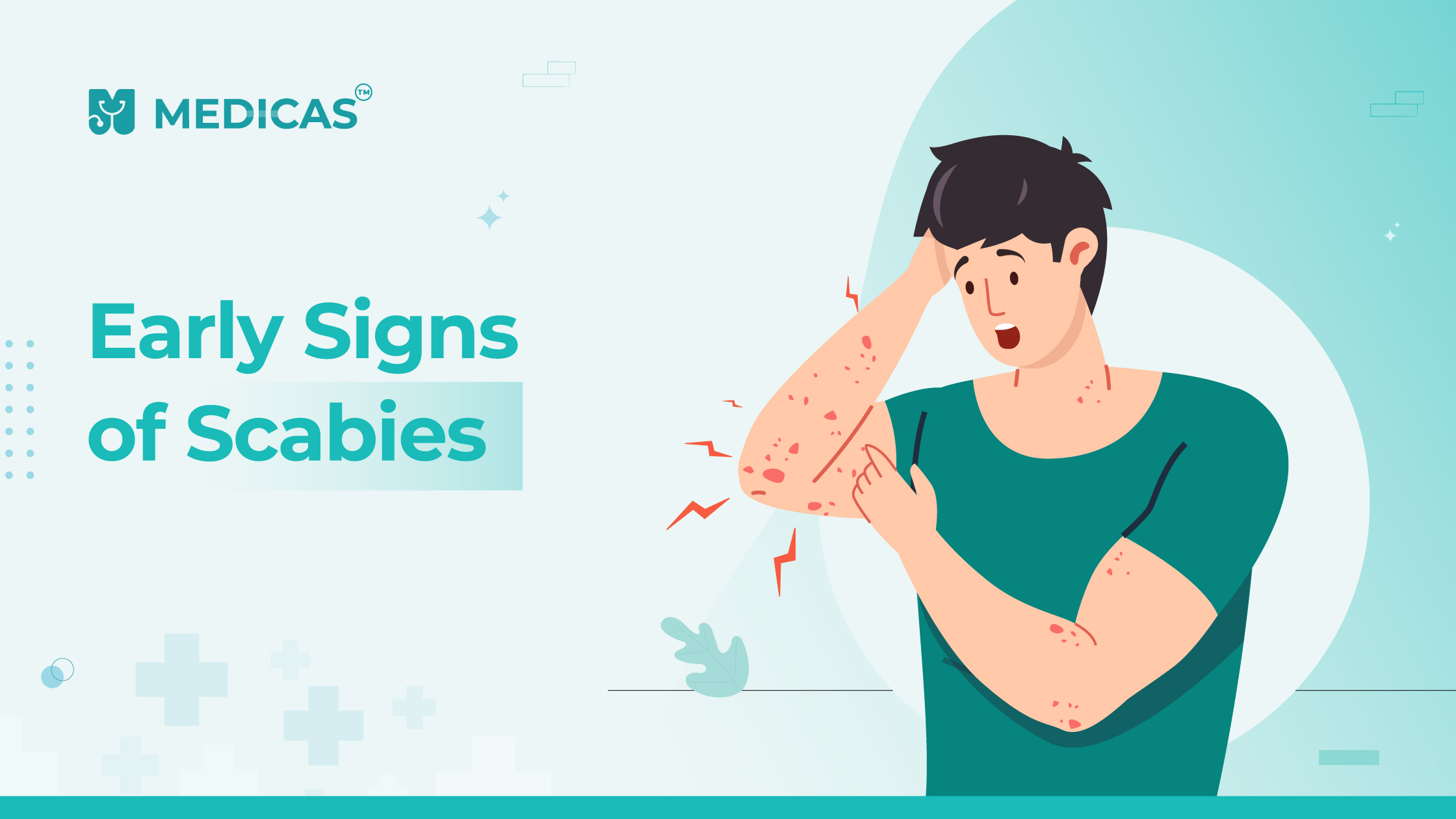
Scabies is one of the most easily misunderstood skin conditions because its early symptoms can resemble eczema, allergies, mosquito bites, or simple dry skin. Many people delay treatment because the irritation begins mildly, only to worsen significantly within days or weeks. As a dermatologist, I see scabies frequently and can assure you that recognising scabies signs and symptoms early is the key to preventing its spread within families, schools, workplaces, and communities.
Scabies is highly contagious, so identifying the condition in its early stages not only helps with quicker treatment but also prevents others from being affected. This guide will help you understand what scabies looks like at the beginning, the signs and symptoms of scabies in adults, children, and older individuals, and how doctors diagnose and treat it. By becoming familiar with these early indicators, you can seek timely help through Online Doctor Consultation with a dermatologist when necessary.
What Is Scabies
Scabies is a skin infestation caused by the Sarcoptes scabiei mite. These microscopic mites burrow into the upper layer of the skin and lay eggs, triggering an allergic reaction in the body. This is what causes the intense itching that scabies is known for.
Because the mites cannot jump or fly, scabies spreads through close and prolonged skin to skin contact. It can also spread through sharing clothing, towels, and bedding, especially in crowded environments. Once the mites enter the skin, they create burrows that can be seen as thin, wavy lines on the surface.
Understanding what scabies is and how it spreads helps you identify scabies signs and symptoms early enough to prevent complications.
What Are the Early Signs and Symptoms of Scabies
Early detection is important because scabies can easily spread to household members before symptoms become obvious. The first signs usually appear two to six weeks after exposure. If a person has had scabies before, symptoms may appear within one to four days due to faster immune response.
The most common early signs include:
- Itching that becomes worse at night
- Tiny red bumps that resemble pimples or insect bites
- Thin lines on the skin that indicate burrow marks
- Itchiness that does not improve with moisturisers
- Rash appearing between fingers or on wrists
- Sudden itching after sleeping in a new environment or using shared bedding
If you notice these early signs and symptoms of scabies in humans, especially when multiple family members develop similar complaints, it is important to consider scabies as a possibility.
Common Scabies Symptoms in Adults and Children
The signs and symptoms of scabies in adults can differ slightly from those seen in children. Adults often develop rashes in specific areas, while children, especially infants, may show symptoms in locations not usually affected in adults.
Scabies symptoms commonly seen in adults include:
- Intense itching that becomes unbearable at night
- Rash between the fingers
- Rash on wrists, elbows, armpits, waistline, thighs and buttocks
- Raised bumps that may form small blisters
- Crusted, dry patches in severe cases
- Burrow lines that appear as thread-like tracks
These warning signs become more pronounced over time. If symptoms appear on the wrists and between the fingers, it is one of the most common signs and symptoms of scabies in adults.
In children and infants, scabies symptoms may appear on:
- Palms
- Soles
- Face and scalp
- Neck
- Back
- Diaper area
Babies may become extremely irritable because of the itching. Scabies in children progresses faster because their skin is more delicate and the immune reaction is stronger.
If you observe symptoms in your child, consult a dermatologist immediately. You can also use Book Appointment feature on Medicas to speak with me directly.
Identifying Scabies Rash and Burrow Marks
Scabies rash is often mistaken for dermatitis, heat rash or mosquito bites. The key difference is the pattern and the presence of burrows. Burrow marks are one of the most definitive scabies signs and symptoms.
How to identify burrow marks
- Thin, slightly raised, wavy lines
- Usually 2 to 15 millimetres long
- Skin coloured or greyish in appearance
- Located between fingers, on wrists, elbows or waist
If you look closely, you may see a tiny dark dot at one end of the burrow. This is where the mite is located. Burrow lines are not always easy to spot, which is why dermatological evaluation is important.
What the rash looks like
- Clusters of red bumps
- Small fluid filled blisters
- Crusty patches from scratching
- Redness and swelling around the lesions
The rash appears in areas with thin skin first. It progresses to thicker areas as the infestation worsens. If your rash does not improve with typical treatments and itching worsens at night, consider scabies as a likely cause.
Scabies Signs and Symptoms and Treatment Overview
Understanding scabies signs symptoms and treatment together helps people take timely action before the condition spreads. Scabies is treatable, but treatment must be applied properly and consistently.
Most people require prescription creams or lotions that kill the mites. These treatments are usually applied from neck to toe and must remain on the skin for the recommended duration. In some cases, oral medication is needed for severe or crusted scabies.
Early detection and correct treatment prevent the infestation from spreading to loved ones. You can Book Appointment with Dermatologist near you through Medicas to receive the most accurate diagnosis and treatment plan.
Also Read: Magnesium Benefits for Skin: Why Your Skin Needs It
When To See a Doctor for Scabies Symptoms
Scabies requires medical treatment. Home remedies may soothe the itching but cannot eliminate mites.
You should consult a doctor if:
- Itching becomes severe or unbearable
- Multiple family members show similar symptoms
- You find burrow lines or unusual rash patterns
- Symptoms worsen despite using moisturisers or antihistamines
- Rash spreads to new areas
- Your child develops rash with irritability
- You have swelling, crusting or signs of infection from scratching
If symptoms interfere with sleep or daily activities, seek medical help promptly.
Scabies Diagnosis: How It’s Confirmed by Doctors
A clinical examination is usually enough to diagnose scabies, but sometimes additional tests are needed to confirm the presence of mites.
Dermatologists may perform:
- Skin scraping
- Dermatoscopy
- Adhesive tape test
- Visual inspection of burrow tracks
These methods help identify mites, eggs or faecal matter under a microscope. Early diagnosis allows quick initiation of treatment. If required, you can Book Lab Test through Medicas for skin-related investigations.
Also Read: Foods That Improve Skin Glow Naturally
Treatment Options for Scabies: Medical and Home Remedies
Scabies treatment focuses on eliminating mites, reducing inflammation and preventing reinfestation. Treatment should be given to the entire household even if symptoms are not obvious yet.
Medical treatments include:
- Prescription creams such as permethrin
- Oral medication like ivermectin for severe cases
- Antihistamines to relieve itching
- Steroid creams for irritation after treatment
Treatment must be applied thoroughly and repeated as advised by your dermatologist.
Home care steps to improve symptoms:
- Wash clothing, towels and bedding in hot water
- Iron clothes to kill mites
- Vacuum furniture and mattresses
- Avoid close contact with others until treatment begins
- Trim nails to reduce scratching injuries
Remember that after treatment, itching may continue for up to four weeks. This does not always mean treatment failure. It is the body’s allergic response that takes time to settle.
If your symptoms do not improve, please consult a doctor as soon as possible.
Prevention Tips: How To Stop Scabies from Spreading
Preventing scabies is much easier than dealing with a full outbreak. Early detection and hygiene measures play a major role in stopping transmission.
Follow these steps to prevent scabies spread:
- Avoid skin to skin contact with someone who has scabies
- Do not share towels, bedding or clothing
- Wash all fabrics used in the past three days
- Dry items on high heat
- Keep your environment clean
- Treat all family members simultaneously
- Avoid crowded sleeping arrangements
- Seek medical attention promptly
- Complete your entire treatment course
If your skin is prone to irritation or dryness, maintaining a healthy skincare routine helps reduce further discomfort.
Conclusion
Scabies is a common skin infestation that spreads quickly but is completely treatable when recognised early. Understanding scabies signs and symptoms helps you take action before the condition becomes severe or affects other members of your household. Whether it appears as night time itching, burrow lines or widespread rash, early recognition combined with accurate diagnosis from a dermatologist ensures effective and fast recovery.
If you suspect scabies, you can use Online Doctor Consultation on Medicas or Book Appointment with Dermatologist near you to get expert evaluation. Quick action protects you and your family and ensures complete relief from this uncomfortable condition.
Disclaimer
Medical Advice: The information provided in this blog post is for educational purposes only and should not be considered as a substitute for professional medical advice, diagnosis, or treatment. Always consult with a qualified healthcare professional for personalized guidance regarding your specific medical condition.
Accuracy of Information: While we strive to provide accurate and up-to-date information, the field of medicine and viral fevers is constantly evolving. The content in this blog post may not reflect the most current research or medical guidelines. Therefore, it is advisable to cross-check any information provided with reliable sources or consult a healthcare professional.
Individual Variations: The symptoms, causes, treatment options, and preventive measures discussed in this blog post are general in nature and may not apply to everyone. It is important to remember that each individual’s situation is unique, and personalized medical advice should be sought when making healthcare decisions.
External Links: This blog post may contain links to external websites or resources for additional information. However, we do not endorse or have control over the content of these third-party websites. Accessing these links is done at your own risk, and we are not responsible for any consequences or damages that may arise from visiting these external sources.
Results May Vary: The effectiveness of treatment options or preventive measures mentioned in this blog post may vary from person to person. What works for one individual may not work the same way for another. It is essential to consult with a healthcare professional for personalised advice tailored to your specific needs