Have you ever seen varicose veins in your family? Almost one in every five adults develops varicose veins, and women are nearly twice as likely to be victims as compared with men. Early symptoms of varicose veins are often ignored, as many people think that varicose veins are a cosmetic problem. However, untreated varicose veins may result in pain, swelling, skin trauma, and even ulcers.
In this blog, we will explore the safest treatment for varicose veins, common symptoms of varicose veins, home remedies to treat varicose veins, and how you can prevent varicose veins.
Understanding Varicose Veins
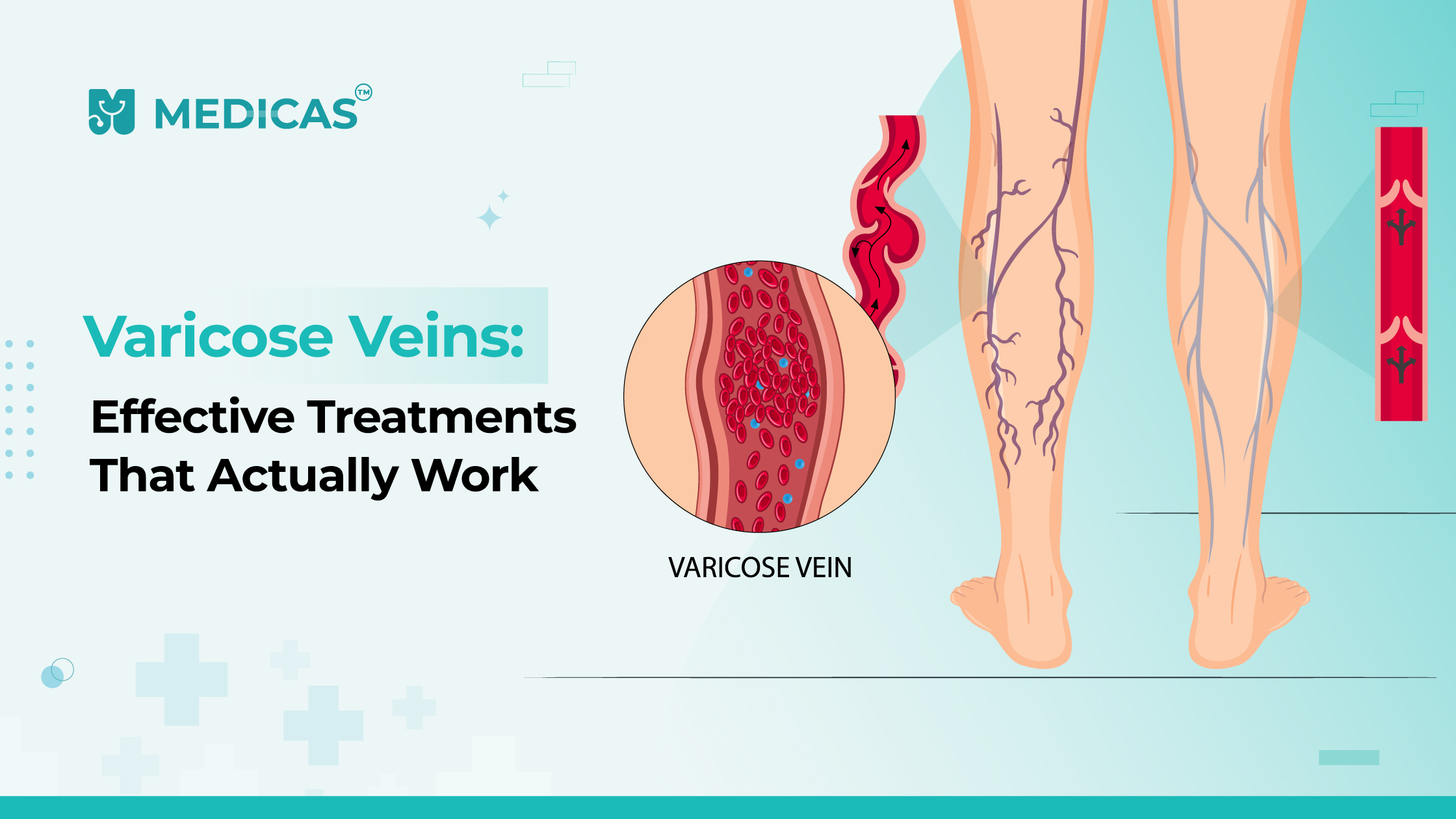
Varicose veins develop when the valves within your veins become weaker, causing the blood to pool and the veins to grow. Most commonly, they occur in the legs due to gravity and as a result of excessive standing. It is not a cosmetic-only condition; it may cause sore legs, heaviness, swelling, cramps, and visible twisted veins. Age, genetic factors, pregnancy, obesity, and jobs that require long hours on the feet are some of the risk factors.
Varicose veins may progress with time, although many individuals postpone treatment. Early care helps to reduce complications such as venous insufficiency and skin breakdown. The first step is deciding the best treatment for varicose veins in the legs and understanding what contributes to the venous weakness. Based on this, your doctors can suggest the best approach, which might be through medical intervention, changes in lifestyle, or using minimally invasive procedures.
Common Symptoms of Varicose Veins
The symptoms are bulging veins, heaviness in the legs, swelling of the ankles, burning, itching, cramps, and pain following standing. This might result in the discoloration of the skin or unhealed sores. Timely identification can help you select the most efficient treatment for varicose veins before they get complicated.
Effective Varicose Veins Treatment Options
The contemporary interventions are aimed at sealing off or eliminating the unhealthy vein to redistribute the blood through healthier vessels. The medical systems today are much better and less invasive than traditional surgery. Radiofrequency ablation, laser treatment, and sclerotherapy are some of the procedures that provide rapid recovery with minimal pain.
Treatment of varicose veins is best related to the severity, symptoms, and structure of the veins. Experts assess the status of the veins using Doppler ultrasound, and then they prescribe an individual initiative. While compression stockings and lifestyle changes help manage symptoms such as swelling, heaviness, and discomfort in mild cases, they do not treat or reverse varicose veins. Medical or minimally invasive procedures are required to close or remove damaged veins and provide long-term relief, especially in moderate to severe cases.
Laser Treatment for Varicose Veins
Laser therapy is a minimally invasive and highly effective procedure that employs heat energy to treat diseased veins. It closes the diseased veins and makes them disappear. It is one of the most popular and painless treatments for varicose veins.
Sclerotherapy
It includes the use of a safe solution, which is injected into the affected vein, which then collapses and fades. Sclerotherapy is ideal for small or mid-size veins, and results can be noticed in a few weeks.
Radiofrequency Ablation (RFA)
RFA involves closed-controlled heat that is used to seal damaged veins. It is efficient, least invasive, and provides prompt recovery. The relief of symptoms occurs immediately in many patients.
Endovenous Laser Therapy (EVLT)
EVLT is a focused laser energy used to close damaged veins internally. It is one of the most popular laser treatments to treat varicose veins and is proven to be a successful approach to treating varicose veins with minimal pain.
Surgical Options for Severe Varicose Veins
Such operations as vein stripping or ligation can be advised in severe cases. Surgery is not used so much recently; however, there are cases when it is still necessary.
Unsure what the best course of treatment is for your varicose veins? Book an appointment with our experts and find the way forward.
Home Remedies and Lifestyle Tips for Varicose Veins
Home remedies do not provide permanent therapy for varicose veins, but they can relieve the pain and avoid aggravation. The methods involve elevating the legs, engaging in physical activity, preventing excessive sitting, and wearing compression stockings. Having a healthy weight will put the leg veins under less pressure and enhance the circulation.
Basic exercises such as stretching, walking, and wearing tight clothes help in the well-being of the veins. Swelling can be reduced by using cold compresses, anti-inflammatory diets, and massage. Such practices are effective in patients who prefer treatment at home.
Best Treatment for Varicose Veins: What Works the Most
Minimally invasive surgery (EVLT), RFA, and sclerotherapy have the highest success rates. They are usually believed to be the most effective in the treatment of varicose veins since they offer lasting results with minimal recovery time.
Preventing Varicose Veins Recurrence
Preventing the recurrence is also important even after the treatment of varicose veins. Exercise, control of weight, and enhancement of circulation can go a long way towards lowering the risk of new varicose veins. To prevent the development of unhealthy venous function, it is better to avoid standing or sitting for long periods, take walking breaks, and wear compression stockings.
The elevation of the legs, balanced nutrition, and hydration enhance the blood circulation and vein power. Ultrasound follow-up measures enable physicians to check the well-being of veins. Recurrence rates can be significantly reduced with regular care, even after such complex procedures. Prevention is a lifelong commitment to veins.
Conclusion: Choosing the Right Treatment for You
Varicose veins are not merely a cosmetic problem: they are a circulation problem that should be given due consideration. Modern laser treatments are safe and successful, minimally invasive. In consultation with a specialist in vascular disease, you can find out what the most effective method of varicose veins treatment is based on your severity. We understand the challenges of living with varicose veins. Book an online doctor consultation to find the healthy and painless path ahead and lead a healthier life.
Disclaimer
Medical Advice: The information provided in this blog post is for educational purposes only and should not be considered as a substitute for professional medical advice, diagnosis, or treatment. Always consult with a qualified healthcare professional for personalized guidance regarding your specific medical condition.
Accuracy of Information: While we strive to provide accurate and up-to-date information, the field of medicine and viral fevers is constantly evolving. The content in this blog post may not reflect the most current research or medical guidelines. Therefore, it is advisable to cross-check any information provided with reliable sources or consult a healthcare professional.
Individual Variations: The symptoms, causes, treatment options, and preventive measures discussed in this blog post are general in nature and may not apply to everyone. It is important to remember that each individual’s situation is unique, and personalized medical advice should be sought when making healthcare decisions.
External Links: This blog post may contain links to external websites or resources for additional information. However, we do not endorse or have control over the content of these third-party websites. Accessing these links is done at your own risk, and we are not responsible for any consequences or damages that may arise from visiting these external sources.
Results May Vary: The effectiveness of treatment options or preventive measures mentioned in this blog post may vary from person to person. What works for one individual may not work the same way for another. It is essential to consult with a healthcare professional for personalised advice tailored to your specific needs